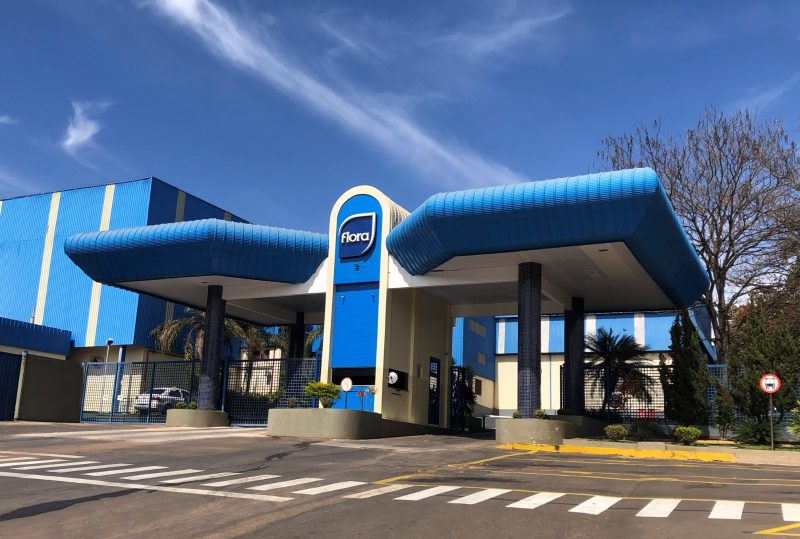
JBS Enters Personal Care Market with Flora Acquisition
09 | 11 | 2026

North American beef operation reverses losses and delivers $21 million in adjusted EBITDA, supported by greater business integration and operational efficiency gains
09 | 11 | 2026
The recovery was supported by the reopening of the U.S. border to cattle imports from Mexico
JBS reported net sales of $22.7 billion and adjusted EBITDA of $1.2 billion in the third quarter of 2026 (IFRS), representing a 5.2% margin. The quarter’s main highlight was the recovery in JBS Beef North America, which returned to positive adjusted EBITDA, supported by improving market conditions and continued operational progress. Net income for the quarter was $189 million.
Under U.S. GAAP, JBS Beef North America recorded adjusted EBITDA of $21 million, with a 0.3% margin, compared with a loss of $100 million in the second quarter of 2026 and a loss of $46 million in the third quarter of 2025. The recovery was supported by the reopening of the U.S. border to cattle imports from Mexico, with heavier cattle reaching processing weight more quickly and a robust beef demand.
The integration of fed beef, regional beef and case-ready operations under a single management structure improved coordination across cattle procurement, production and sales. The company also continued its focus on improving yields, increasing productivity and enhancing operational reliability, while expanding the sharing of best practices across its global operations.
“Returning to positive EBITDA at JBS Beef North America is an important step forward and is beginning to reflect better market conditions and the work we have done to improve the business’s competitiveness. We have strengthened operational integration, commercial execution and industrial efficiency,” said Gilberto Tomazoni, Global CEO of JBS.
Market conditions varied across proteins and geographies during the quarter. According to Tomazoni, JBS’s diversified global platform strengthens its ability to respond to changing market conditions, including higher costs, increased supplies of certain proteins and shifts in international trade flows.
“We are adjusting production and commercial strategies to the conditions of each business, while maintaining our focus on efficiency, innovation, brands and higher-value products,” he added.
Net leverage ended the third quarter at 3.54x in U.S. dollars. Net debt totaled $19.3 billion, while total available liquidity, including cash, financial investments and revolving credit facilities, reached $8.2 billion. JBS maintains a long-term debt profile, with an average maturity of approximately 14.4 years, an average cost of 5.8% and more than 90% of its debt at fixed interest rates and no material maturities over the next five years.
Free cash flow performance reflected higher inventories, including Brazilian beef production ahead of shipments to China and inventory buildup at Seara in Europe, as well as extraordinary tax payments related to prior-year results.
“Our priority is to strengthen cash generation through working capital management and disciplined capital allocation. Our long-term debt profile gives us the flexibility to make these adjustments and navigate business cycles,” said Guilherme Cavalcanti, Global CFO of JBS.
Business Units
Seara (IFRS) maintained solid profitability during the quarter. In export markets, fresh poultry performance was supported by higher prices and volumes, with September reaching record export volumes for the company. Pork exports, meanwhile, remained pressured by ample global supply, which also affected market dynamics in Brazil.
In Brazil, Seara continued to strengthen its operations by expanding its value-added product portfolio, building its brand and maintaining solid commercial and operational execution. The business also gained market share and achieved its highest-ever levels of brand consideration and preference. During the quarter, Seara recorded net sales of $2.5 billion and adjusted EBITDA of $331 million, representing a 13.2% margin.
JBS Brazil (IFRS) reported lower net sales compared with the prior year, mainly reflecting reduced export volumes, particularly to China, following the completion of the 2026 Chinese quota. In the domestic market, higher sales reflected strong commercial execution, supported by Friboi+, the company’s retailer relationship program, and a broader value-added product portfolio. Profitability was also affected by higher cattle prices during the quarter.
At the beginning of the fourth quarter, Chinese demand strengthened as customers began securing volumes for the 2027 quota, supporting a recovery in export volumes and a more favorable commercial environment. The recovery in exports coincides with a seasonally stronger period for beef consumption in Brazil, driven by year-end demand. JBS Brazil ended the third quarter with net sales of $4.1 billion and adjusted EBITDA of $141 million, representing a 3.4% margin.
Pilgrim’s Pride Corporation (U.S. GAAP) reported net sales of $4.6 billion and adjusted EBITDA of $316 million, representing a 6.8% margin. Increased chicken supply in the United States pressured prices, partially offset by operational improvements and growth in prepared foods.
Prepared foods volumes increased more than 15% compared with the third quarter of 2025, while retail sales of the Just Bare brand grew more than 25%. Just Bare also gained more than 300 basis points of volume market share in the frozen fully cooked category, while the prepared foods business delivered year-over-year growth in both sales and margins.
In Europe, poultry and prepared meal offerings continued to resonate with consumers seeking affordable protein options. In Mexico, profitability improved sequentially, supported by more favorable market conditions and growth in branded fresh and prepared products. The company maintained its investments in brands, innovation and the expansion of its higher-value product portfolio.
JBS USA Pork (U.S. GAAP) reported lower net sales compared with the prior year, reflecting an unusually challenging market environment for the business. Domestic pork demand softened as inflation continued to pressure American consumers, while increased global pork supply weighed on export demand across key markets. Lower volumes and average selling prices affected profitability during the quarter.
The company continues to expand its value-added and branded product portfolio as part of its strategy to mitigate commodity market volatility and further strengthen the resilience and consistency of what has historically been one of its most stable business units. In the third quarter, JBS USA Pork recorded net sales of $1.9 billion and adjusted EBITDA of $97 million, representing a 5.2% margin.
JBS Australia (U.S. GAAP) faced profitability pressures during the quarter amid a more challenging environment for its beef business. Export performance was affected by the completion of quotas in key markets, including China, South Korea and Japan, as well as lower shipments to the United States.
Higher cattle and lamb costs also weighed on results, reflecting continued rainfall across key livestock-producing regions, with lamb prices reaching record levels during the quarter. While these conditions pressured short-term profitability, improved pasture conditions support livestock availability over the longer term.
Huon delivered a strong performance, supported by increased harvest and higher fish weights. JBS Australia ended the quarter with net sales of $2.5 billion and adjusted EBITDA of $155 million, representing a 6.2% margin.
Published by: JBS Brazil